The case a child would draw
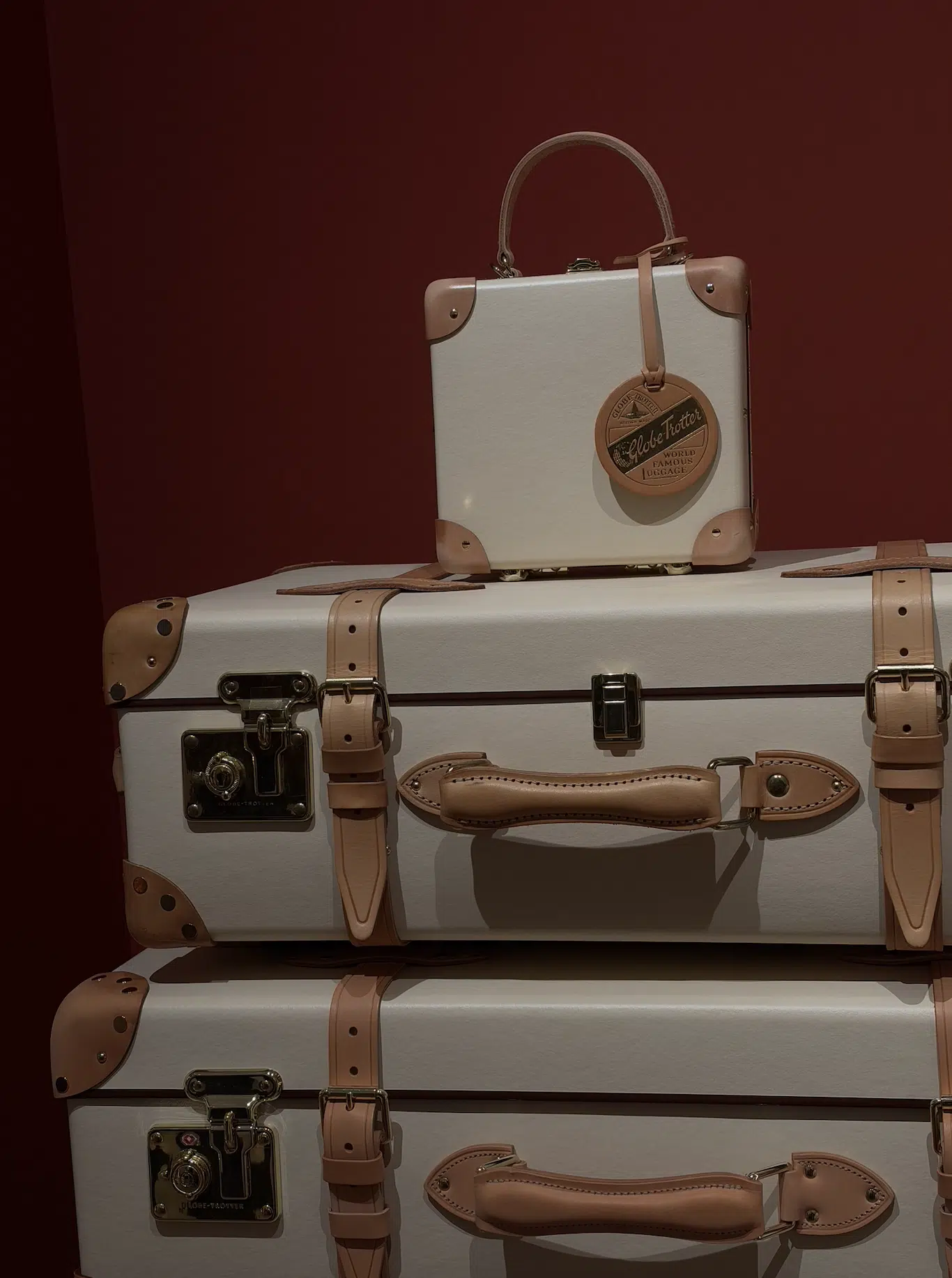
Ask anyone to draw a suitcase and they will draw something close to a Globe-Trotter without meaning to: a rectangle with rounded corners, leather straps, riveted edges, and the unhurried look of an object that has passed through a few customs desks. The case has become the shorthand for travel itself.
That silhouette has earned its status the hard way. Globe-Trotter cases went with army officers across Africa and with polar explorers onto the ice, Robert Scott among them. They carried the belongings of the British royal family to official engagements. Later they took rock stars’ wardrobes from limousines to penthouse suites. Few objects have moved so easily between the heroic and the glamorous.
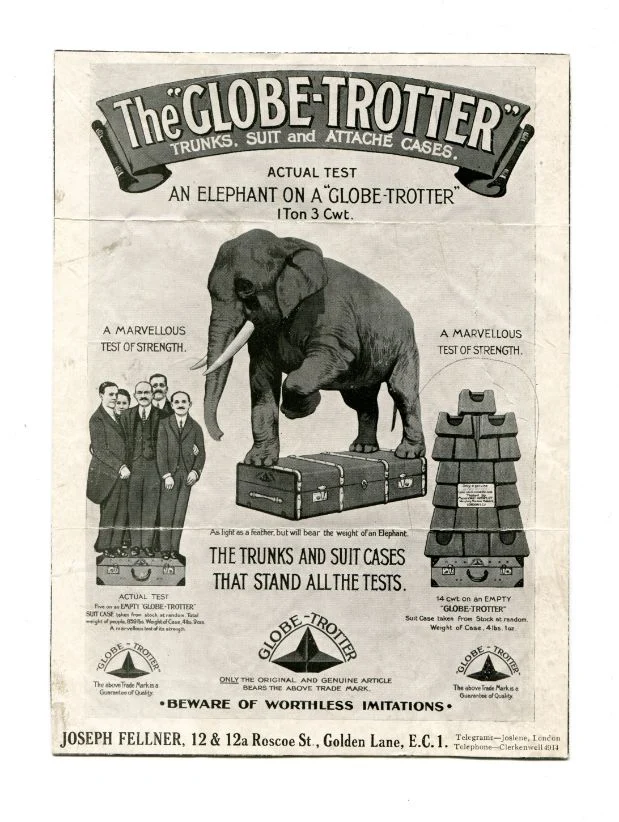
The house has never been shy about proving its strength either. In a stunt that has become brand legend, Globe-Trotter borrowed an elephant from Hamburg Zoo and had it stand on one of its cases. The case survived. A later test showed that a cabin trunk could take around eight tons of pressure before it gave way. The brand once advertised itself with a line of confident British understatement: « The world’s most famous suit cases. » It was hard to argue with.
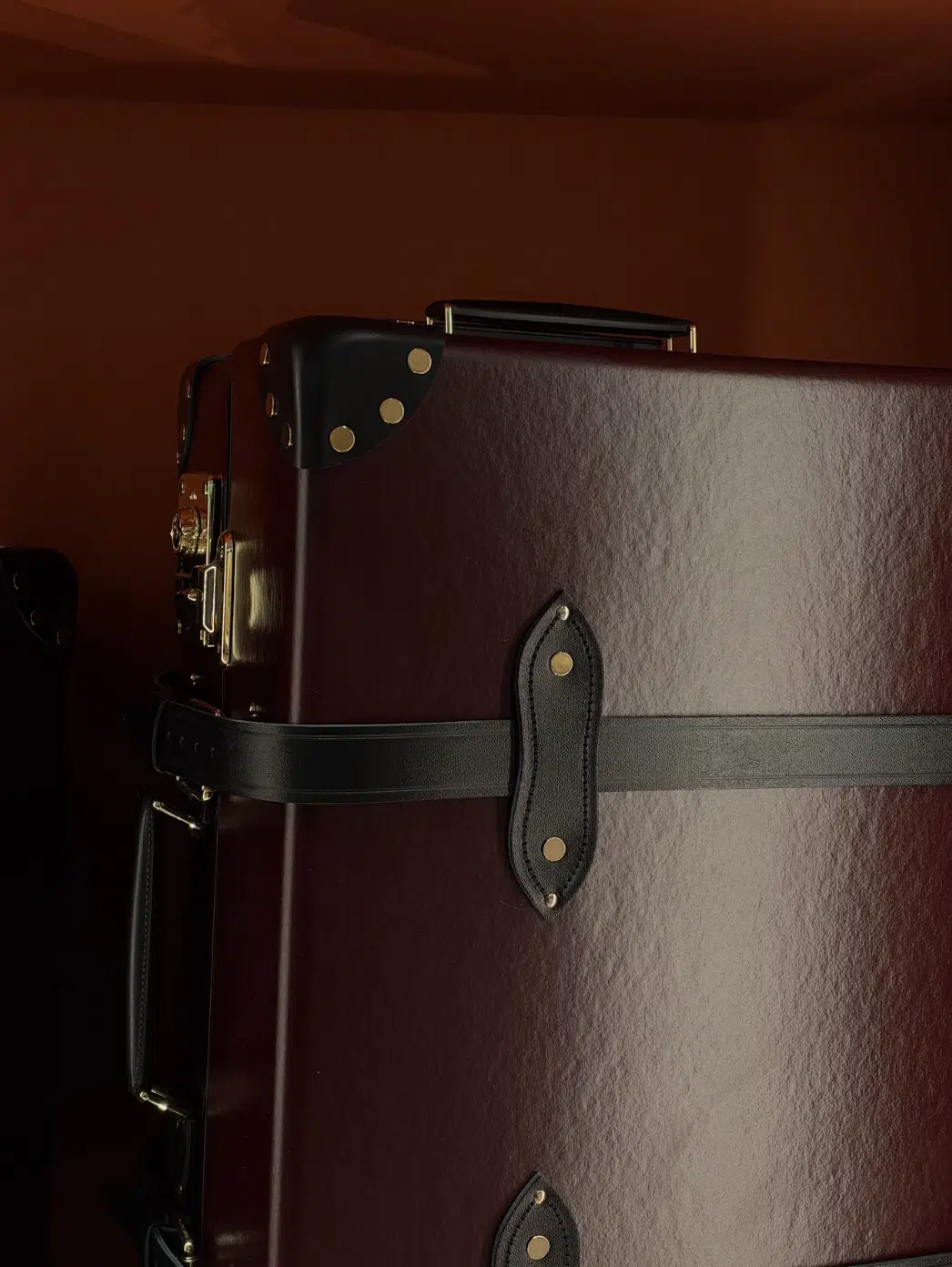
Paper, pressure and patience: the secret of vulcanised fibreboard
The secret behind this toughness is a material that sounds almost too modest for the job. Vulcanised fibreboard is built from layers of paper and natural fibres, treated and then pressed until it becomes a technical material that is lighter than aluminium and remarkably strong. It was a radical innovation when Globe-Trotter first adopted it, and more than a century later it is still the body of every case.
What happens next shows how craft and technology can work together. In the English factory, the fibreboard is cut both by modern CNC machinery and by a Victorian guillotine that is older than the company itself. Corners are shaped by hand, leather straps are stitched, and brass rivets are set by eye, a gesture that takes years to learn. The machines give precision; the hands give character.
This is why a Globe-Trotter, like a pair of old 501s or a waxed Barbour, looks better with every scratch. The dents and faded stickers are not damage. They are a travel diary written on the outside.
From Saint-Tropez to the Champs-Élysées: a very French year
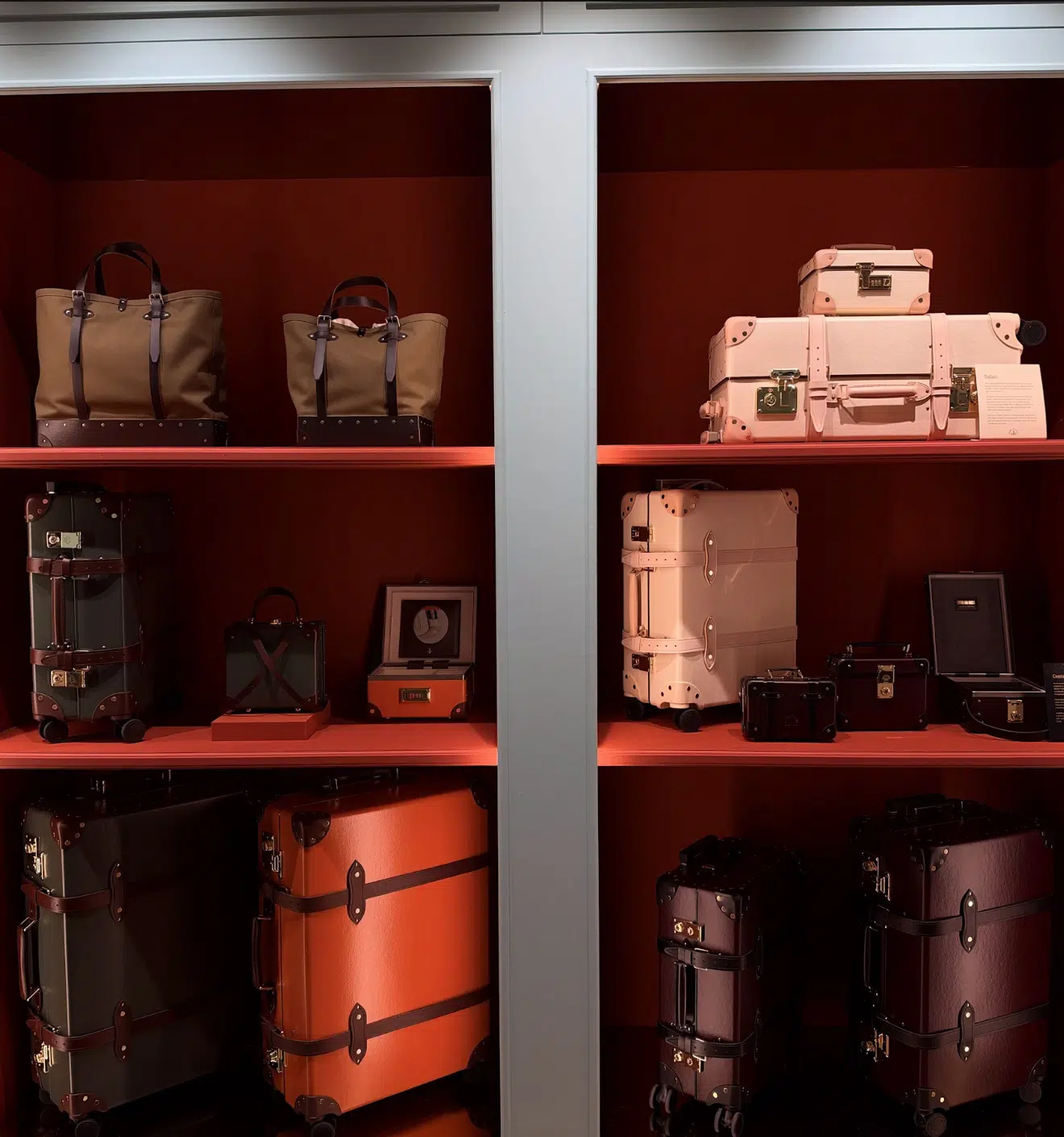
The Paris opening also fits a clear French momentum. This summer, Globe-Trotter set up in Saint-Tropez with The Shop on The Corner, a two-storey pop-up on avenue du Maréchal Foch shared with Connolly, Smythson, Fornasetti and Alessi, which runs until 5 October. There was a Fornasetti café upstairs, British luxury downstairs, and a Personalisation Week during which artisans gold-stamped and hand-painted cases on the spot.
From the Riviera to the Golden Triangle, the message is the same: in an age of one-click shopping, people want to touch, to talk, and to leave with an object that tells a story.
From the Centenary to the racetrack
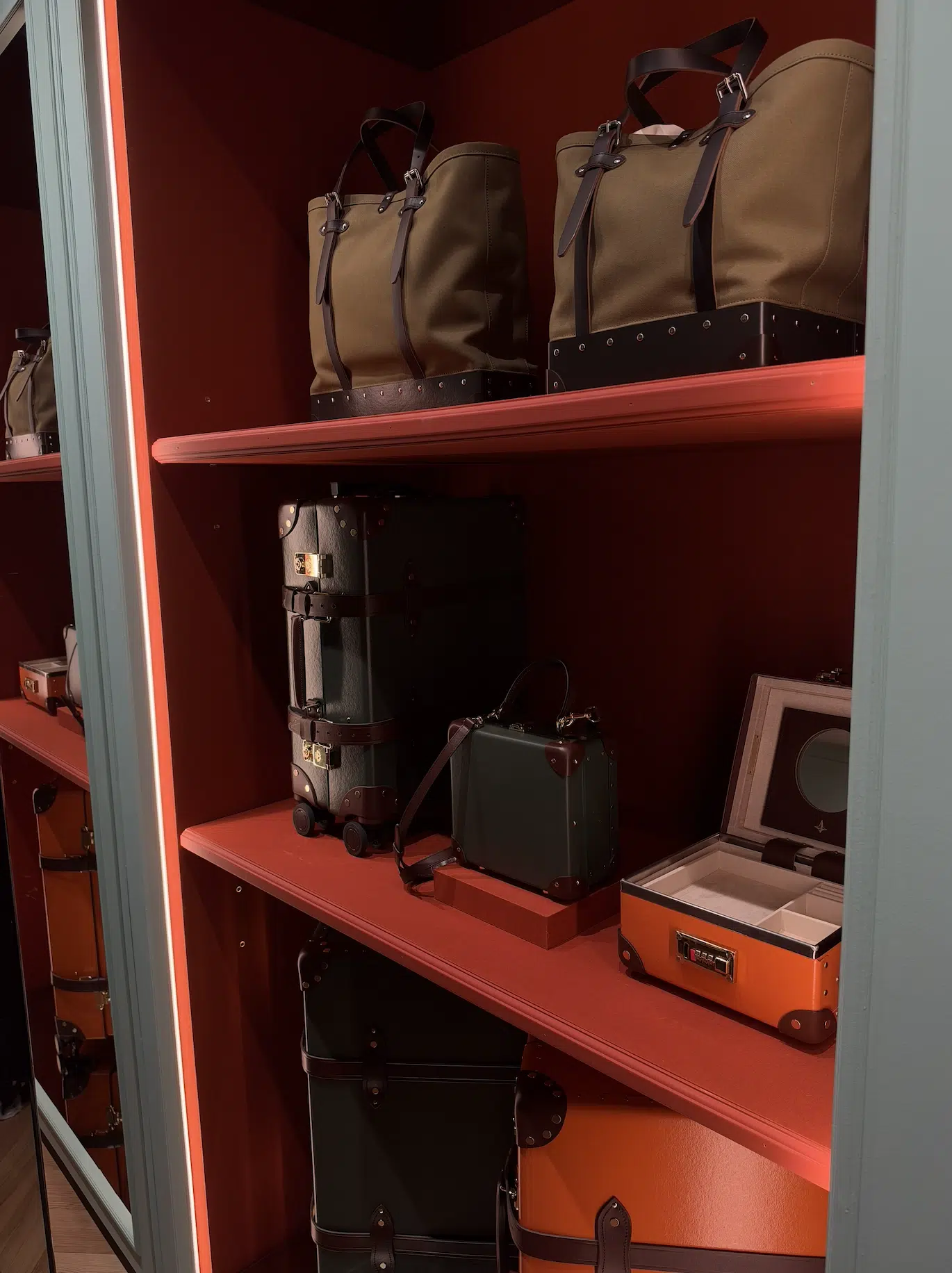
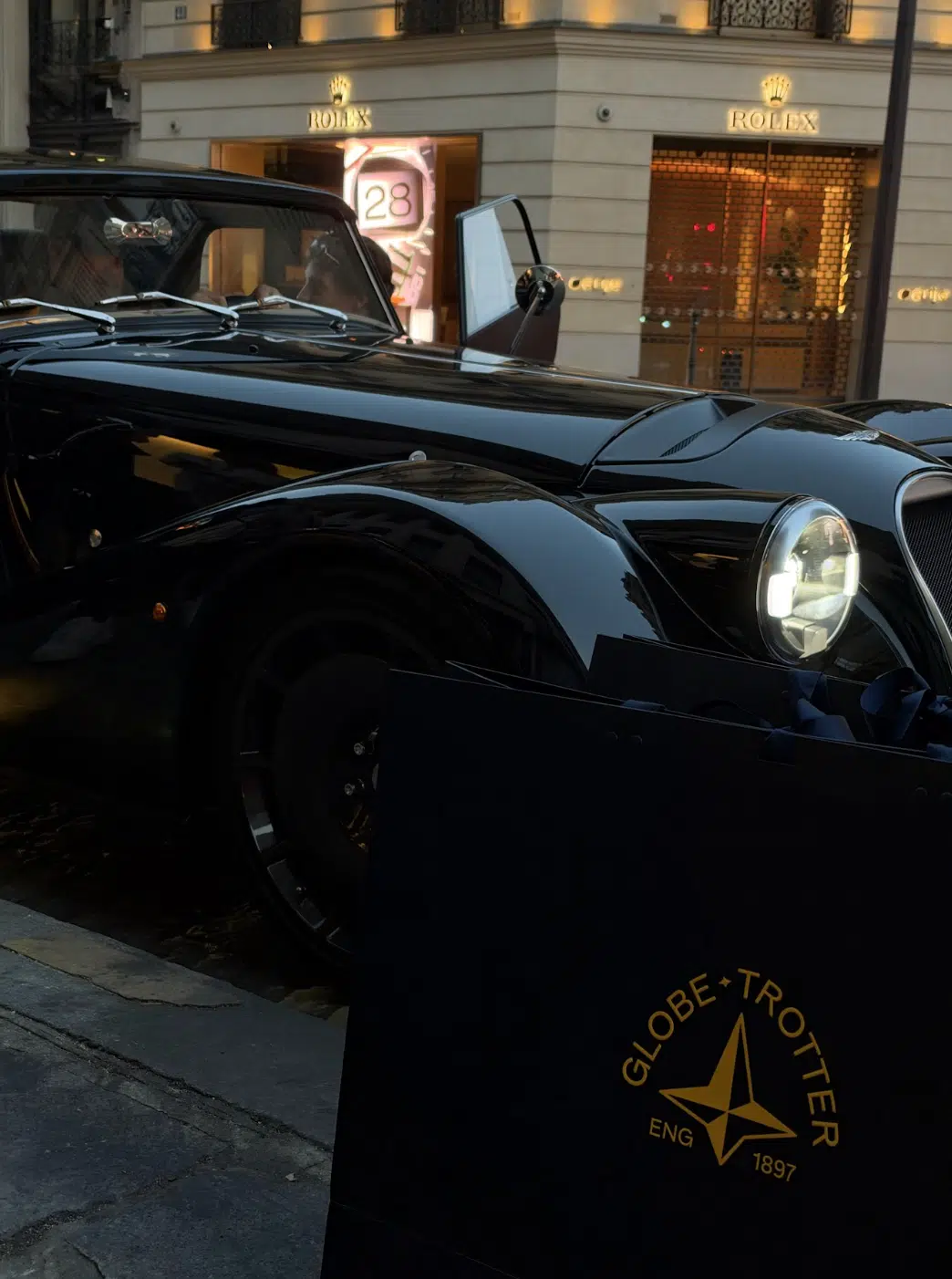
Long indifferent to fashion, the house found its signature in 1997 with the Centenary, whose ivory-and-brown Safari colourway became its best-known face. Since then, Shrigley, Comme des Garçons, Paul Smith, BAPE and Tyler, the Creator have all put their mark on it. The latest partner is Aston Martin’s Formula One™ team, with a 100-piece edition in black and racing green, available rue Pierre Charron.
The new boutique stays true to the house’s other addresses, where the case is the star and everything else steps aside. As for the verdict, a gentleman makes up his own mind, so push the door open and judge for yourself.